
Swim · Article
Goggles — Which Ones?
Finding the right goggles for you: fit, light conditions, open-water swimming and the different styles available.
By Precision Coaching
This is always a contentious subject in that it is, like many types of equipment, entirely personal to the individual. I’ll try and remove the fog!
There are numerous different types of goggle which I’ll go into shortly, but in the interests of budget and not spending loads on different styles before finding the ones that work for you, I’ll list some general points to consider.
Fit
As a rule most people’s eye sockets are broadly similar, the only adjustment to consider being the nose piece. For example, I have a high bridge to my nose so I need to ensure I get goggles with an adjustable nose piece, which rules out certain models. The flip side of this is that people’s skull shapes can vary considerably. This means for the best generalist fit, you’re looking for smaller goggles that sit inside the eye socket with an adjustable nose piece.
If you have a bit more of a budget or you can borrow one of your training partner’s goggles to try, you can play about a bit more and look at some of the larger goggles and masks available.
Light conditions
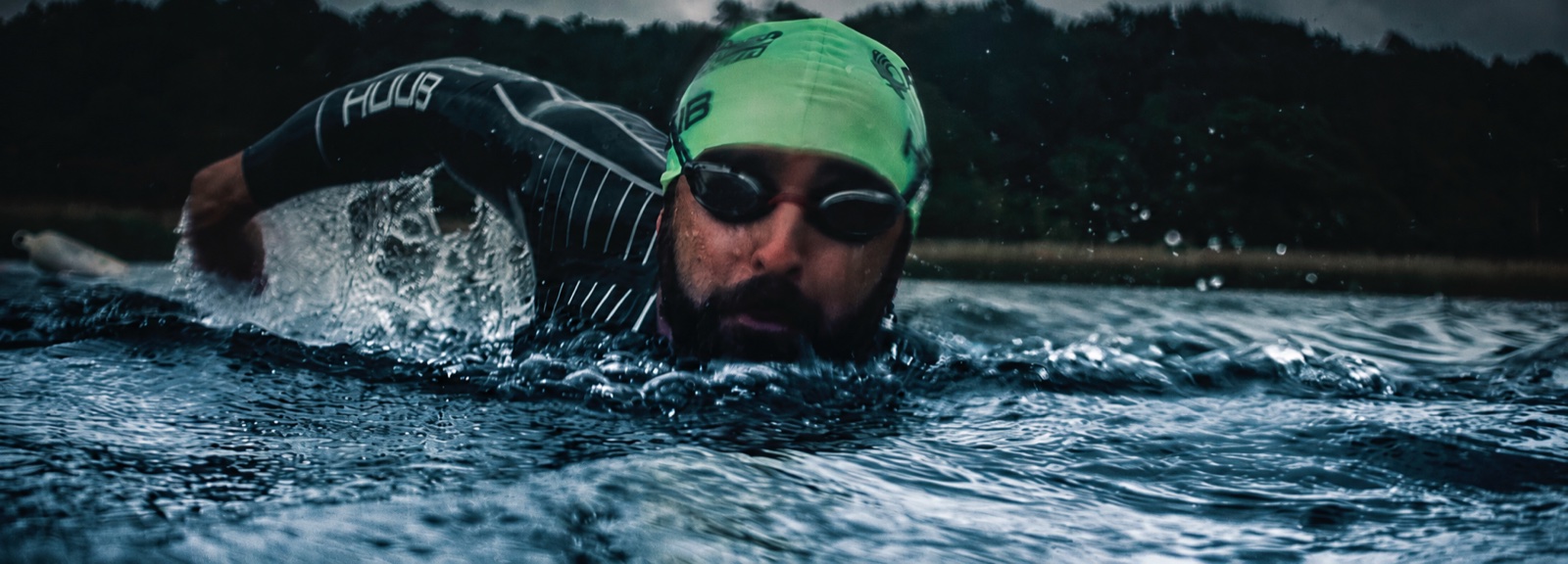
Swimming in open water is very different to the indoor pool in that you could well be swimming into the rising sun, and sighting is a crucial part of open water swimming. Consequently, considering a goggle that either has different lenses that can be swapped out or a couple of different sets of the same goggle with clear and dark lenses is very worthwhile. Bear in mind that the darkest lenses often are too dark for indoor pool use.
Use — mass swims
Triathlon, whilst officially a non-contact sport, athletes can experience “rubbing is racing” moments in the water! 🥴😂
Playing this video connects to YouTube, which may use cookies or similar technologies. Watch on YouTube ↗
Consideration therefore should be given to the best sort of goggle for this. If your preference is to swim mid-pack in amongst it, you almost certainly want a goggle with a silicone seal and probably one of the larger models so that if you do get bashed then you don’t take the blow directly to the eye itself. I would add that this is a pretty infrequent occurrence, it’s all accidental and, as a coach, I’d never advise being right in the middle of the mosh pit…
Types of goggles
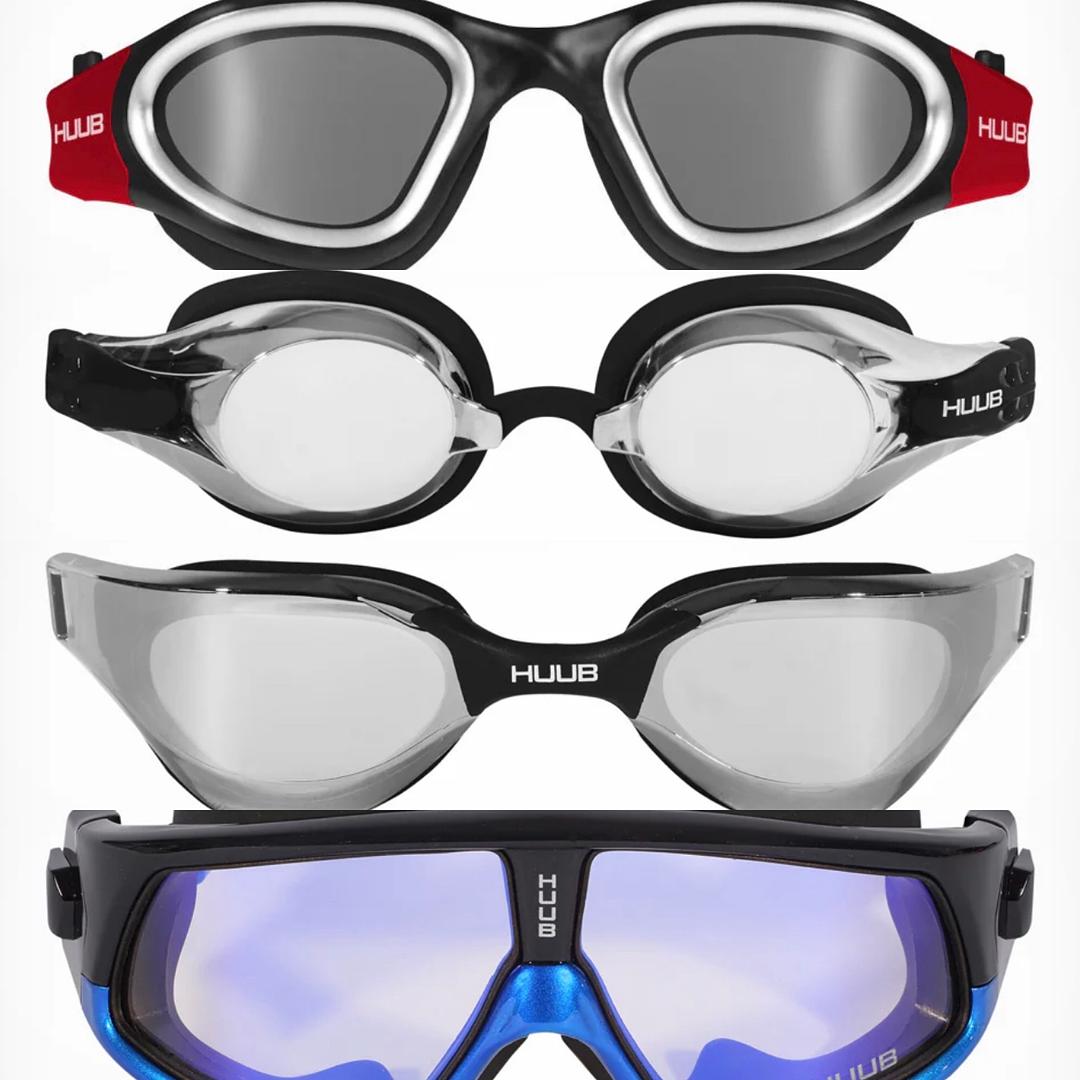
Small goggles
Typically, these are easier to fit as they sit inside your eye socket. Most athletes from a swim background will prefer this sort of goggle and indeed most FINA race goggles are of this type. A downside of these can be limited peripheral vision but this isn’t the most important element, rather a nice to have.
Large goggles
These sorts of goggles will generally seal outside of the eye socket and have a soft nose piece that is not interchangeable. Advantages are that it is generally a more comfortable fit and less of an issue should you happen to be replicating the CLIF bar ad from the early-00s as detailed above. Some models also have different lenses for different light conditions which is a bonus for sure.
Mask goggles
Some athletes swear by these as the peripheral vision is the best it’s going to be and the seal is generally the softest you can find. That said, getting a solid seal with these is much harder and with the greater seal surface area comes more potential to create leaks. Those that advocate for these generally have a perfectly shaped head for this particular type. You’re unlikely to see these at the pointy end of the race with the increased drag. Of course there are exceptions to the rule.
General advice: anti-fog
A new set of goggles are a beautiful thing to behold, the clarity in particular! The sad thing is, this is the best they’re ever going to be… :( As soon as you start wiping the inside of the goggle they will start to lose some of their edge. You can use anti-fog sprays, but please be careful and follow the instructions closely unless you want to be crying your way around an IRONMAN course!
My best advice is that as goggles deteriorate reasonably quickly, I’d look to have a new set ready for a couple of weeks prior to your A race so that you get the best vision possible.
New technology
Goggles haven’t escaped the attention of technology and in fact you can get goggles that have a hologram in detailing your swim speed, distance to buoys, run sessions etc, which is super impressive. Personally, I would steer clear of these for now. I’ve seen multiple cases of athletes using these changing their head position considerably, resulting in a huge amount of extra drag. In fact, just by removing the goggles I’ve saved some athletes 15–20 seconds per 100m. The other side of this is that they are very expensive, around four times the cost of a normal pair of goggles and no more durable. On top of that, to access all the features there is a subscription. In my opinion, there are much better places to spend your money that will have an impact on your performance in training and racing, e.g. nutrition.